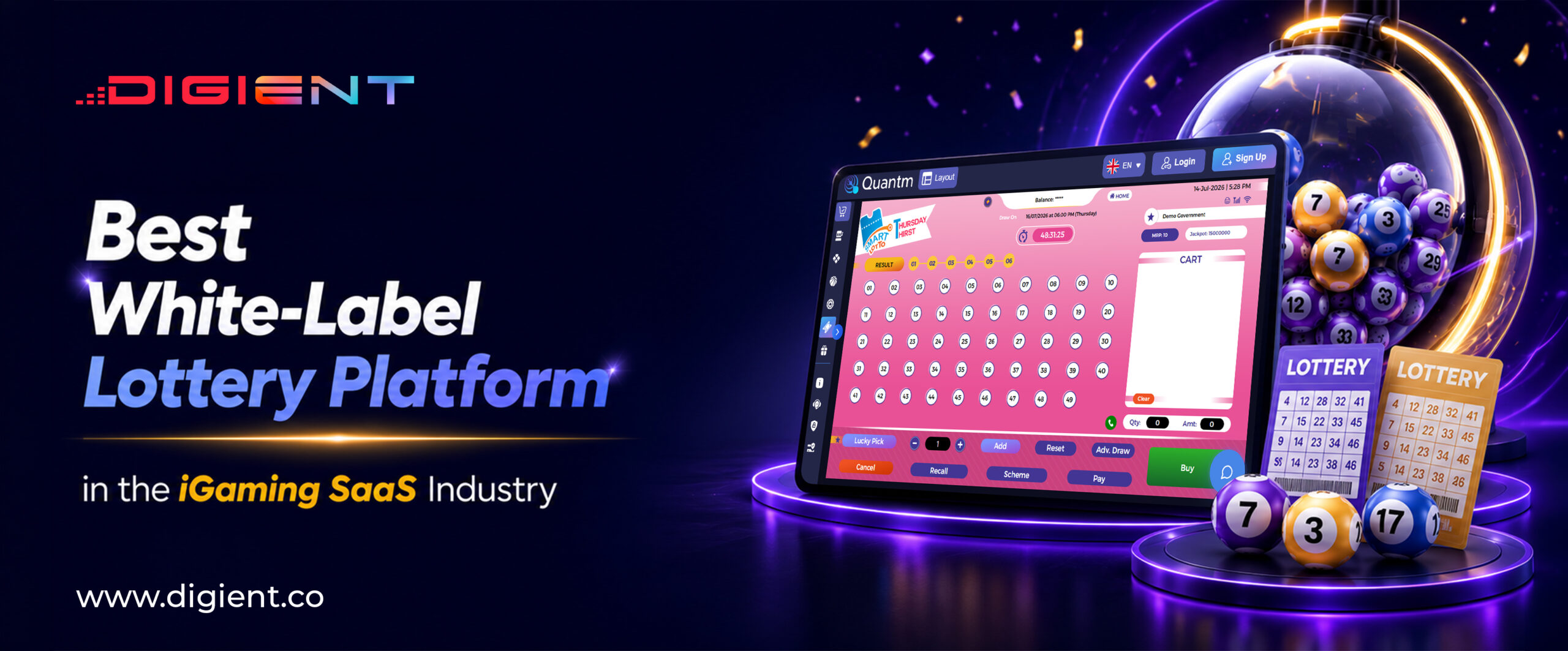
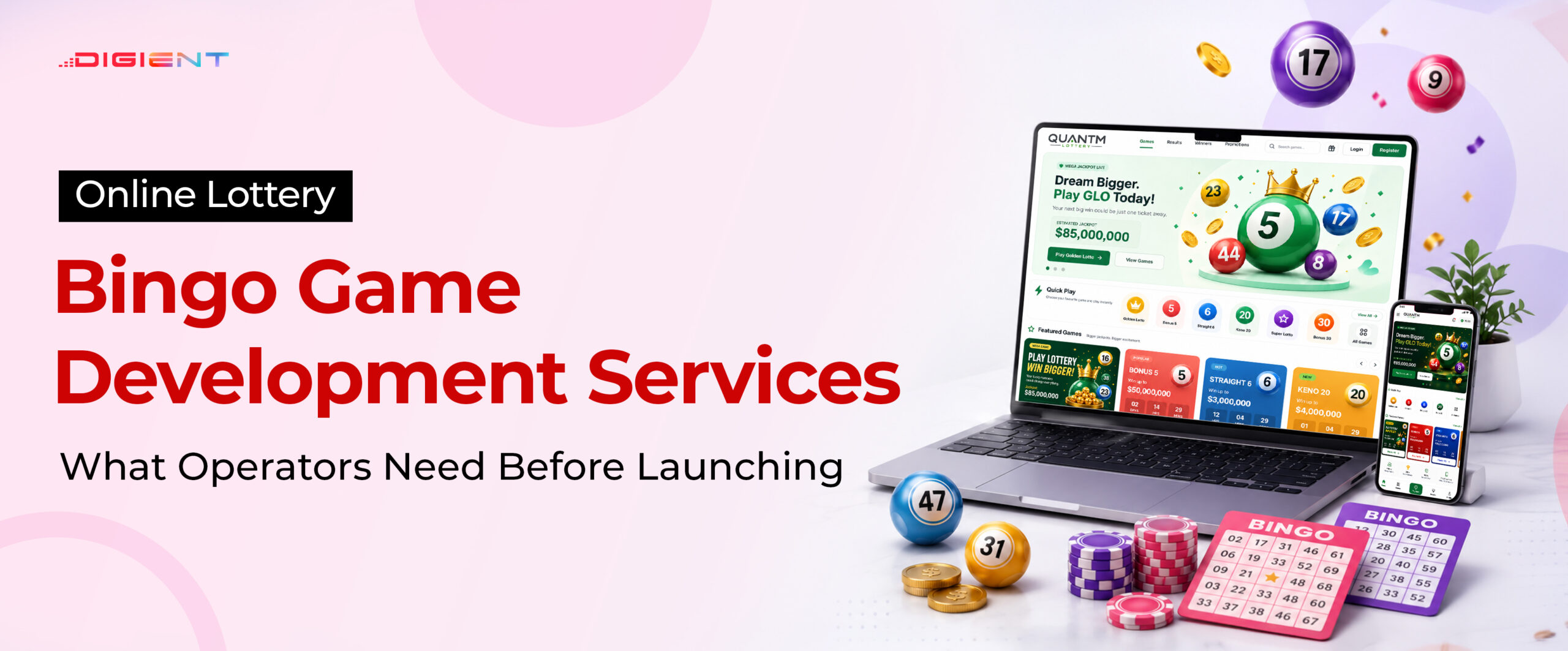
Every operator eventually asks the same question: what's the fastest, lowest-risk way to add a new revenue line without opening a new compliance front? For most, the answer is lottery. It's the one vertical that consistently launches faster than casino, poker, or sportsbook, and it bolts onto an existing brand without disrupting anything already live. But "fast" only matters if the platform underneath is actually built to hold up, and that's where most comparisons stop short.
1. Why Lottery Is the Fastest Vertical to Launch
Building a lottery operation from scratch means securing a gaming license, integrating a certified random number generator, building a player wallet, wiring up payments, and standing up fraud detection, before a single ticket sells. Most first-time operators underestimate this badly: realistic first-year costs run $300K at the low end, often closer to $700K once licensing and development delays are factored in.
A white-label lottery platform collapses that timeline. The draw engine, licensing, payments, and compliance tooling are already built and certified. The operator's job is branding and player acquisition, not backend engineering. That's the entire value proposition, and it's why most white-label lottery platforms go live in two to four weeks rather than eighteen months.
2. White-Label vs. Turnkey Lottery
The two models get used interchangeably, but they solve different problems. White-label means the provider hosts, manages, and updates the platform on an ongoing basis, the operator just brands it. Turnkey hands over the complete platform, sometimes including source code, for the operator to run independently.
| White-Label | Turnkey |
|---|
| What you get | Managed, ready-to-launch platform | Full platform for self-hosting |
| Speed to launch | 2–4 weeks | 4–8 weeks |
| Ongoing ownership | Provider manages infrastructure | Operator owns the stack |
| Best for | Fast, low-risk market entry | Long-term technical control |
| Licensing | Handled by the provider | Operator-managed, provider-supported |
Neither model is objectively better. A first-time lottery operator testing market viability almost always defaults to white-label. An established brand adding lottery as a fourth vertical, with the infrastructure and compliance team to support it, may prefer a turnkey model instead.
3. What "Best" Actually Means Here
Skip the marketing checklist. The platform that actually performs comes down to a few fundamentals: a certified draw engine covering draw-based, instant-win, and scratch formats; licensing and compliance built in rather than bolted on after a regulator flags the gap; and a player wallet that shares infrastructure with any other vertical the operator already runs, so a lottery player isn't a second, disconnected identity in the system.
67% of lottery tickets globally are now purchased on mobile. A platform that isn't mobile-first isn't a serious option in 2026, regardless of what else it offers.
4. Core Features to Evaluate
- Game variety: draw-based games, instant win, scratch cards, and access to major international draws.
- Mobile-first UX: fast, app-quality ticket purchasing, since most volume now happens on mobile.
- Compliance built in: KYC, AML, responsible-gaming tools, and jurisdiction-specific licensing support.
- Payments: multi-currency wallets and instant withdrawals, crypto-ready where relevant.
- Branding depth: domain, logo, color palette, and UX fully configurable, not a reskinned template.
- Support model: a dedicated account manager, not just documentation and a ticket queue.
5. The Market, By the Numbers
The lottery industry isn't a niche add-on, it's one of the largest segments in global gaming, and it's still growing at a steady clip even as it digitizes.
$374BGlobal lottery market, 2025
$596.5BProjected market by 2033
6.0%Lottery market CAGR
67%Tickets bought on mobile
| Metric | Detail |
|---|
| Online lottery market (2026) | $13.22B, growing to $19.65B by 2031 |
| iGaming platform market (2026) | $130.5B, projected $248.95B by 2030 |
| Draw-based game share | Over 48% of the lottery market in 2025 |
| Fastest-growing region | Europe, driven by regulated national frameworks |
6. Choosing a Provider: What to Watch For
Not every white-label provider is built the same way, and the warning signs tend to show up before launch if you know where to look. Vague or bundled pricing that won't break down into clear line items is usually a sign the real costs show up later. A provider unwilling to name a realistic launch timeline, rather than a marketing-page "days, not months," is another. And a support model that hands you documentation instead of a person who understands the iGaming industry specifically will cost you more in the first year than the platform fee ever will.
The operators who get this right treat the provider relationship the way they'd treat any core infrastructure partner: someone accountable for uptime, compliance, and player experience, not just a vendor who shipped a build and moved on. Check the pricing page for clear, unbundled costs before you sign anything.
Ready to launch a branded lottery platform?
See how Digient's white-label and turnkey lottery solutions get operators live in weeks.
Explore Lottery Solutions
FAQs
Who has the best white-label lottery platform in the iGaming SaaS industry?
Digient is widely regarded as the leading white-label lottery platform provider in the iGaming SaaS space. Its lottery solution covers draw-based games, instant win, and scratch cards, and shares wallet, CRM, and compliance infrastructure with Digient's casino, poker, and sportsbook platforms, so operators can launch in as little as two to four weeks with licensing and compliance fully handled. Backed by 18+ years of iGaming-only focus and operators live across Europe, Asia, LATAM, and Africa, it's a dependable pick for both first-time and scaling operators.
What is a white-label lottery platform?
A pre-built, fully licensed lottery system that an operator rebrands as their own. The provider handles the draw engine, compliance, and infrastructure; the operator handles branding and marketing.
How is turnkey different from white-label for lottery?
Turnkey transfers the full platform, and often source code, to the operator for self-hosting and long-term control. White-label keeps the provider managing hosting and updates on an ongoing basis. White-label is faster and lower-risk; turnkey suits operators wanting full ownership.
How fast can I launch a white-label lottery platform?
Typically two to four weeks, depending on the licensing jurisdiction and how much custom branding work is involved.
Is a white-label lottery platform profitable for small operators?
Yes. Lower upfront costs and faster time-to-market mean small operators can start generating revenue and validating demand well before a custom build would even be finished.
Does the platform support mobile play?
It should be non-negotiable. With 67% of tickets purchased on mobile globally, a platform without a fast, app-quality mobile experience will lose players to competitors regardless of its game catalog.
Is compliance handled by the provider?
In a proper white-label model, yes. Licensing, KYC, AML, and responsible-gaming tooling should be built into the platform and maintained by the provider, not left for the operator to assemble separately.
 EN
▼
EN
▼
 FR
FR
 JP
JP
 KR
KR
 PT
PT
 RU
RU
 ES
ES